
Sutton's draft Local Plan offers 738 homes a year against an assessed need of 1,651, and the £1bn London Cancer Hub has consent. Where each scheme stands.
Sutton’s planning year turns on two stories. The new Local Plan, the rulebook that will decide where roughly 12,000 homes go by 2041, finished its final public consultation on 31 July 2026 and heads to the government this autumn. And at Belmont, the London Cancer Hub won consent in February for a £1 billion expansion that the council calls the biggest economic project in the borough’s modern history. Here is where each of the big schemes stands, all from the council’s own documents and announcements.
The new Local Plan: consultation closed, examination next
The plan Sutton currently lives under was adopted in February 2018 and runs to 2031 (Sutton Council: the Local Plan). Its replacement, covering 2024 to 2041, has just passed its last public milestone: the final draft, formally the Regulation 19 publication, was consulted on from 18 June to 31 July 2026. The council describes that window as “your final opportunity to comment on the Draft Local Plan before the council sends it to the government for examination”, and says a report will go to Full Council in the autumn seeking authority to submit the plan to the Secretary of State and the Planning Inspectorate (Sutton Council: Local Plan review). The council’s own working assumption is adoption “in around late 2026” (the Local Plan), an ambitious timetable given an independent examination still has to happen.
What it means for you: with the comment window shut, the next stage belongs to the independent inspector. Comments submitted at Regulation 19 travel with the plan to the examination, where the arguments are heard in public. If a site near you is allocated in the draft, the principle of building there hardens considerably once the plan is adopted, so the examination is the last point at which allocations can realistically change.
The housing numbers, and the gap in the middle
The draft plan’s arithmetic is the story. The government’s standard method says Sutton needs 1,651 net new homes a year, which is 27,812 over the plan period, a big jump from the 886 a year presented at the first consultation stage in 2024. The plan the council has actually published proposes far fewer: the London Plan target of 469 a year for the first two years, then 738 homes a year from 2026-27, a total requirement of 12,009 homes by 2041 (Draft Sutton Local Plan, Regulation 19, June 2026). For scale, the borough has actually delivered an average of 500 homes a year over the last decade, of which 29% were affordable (same document).
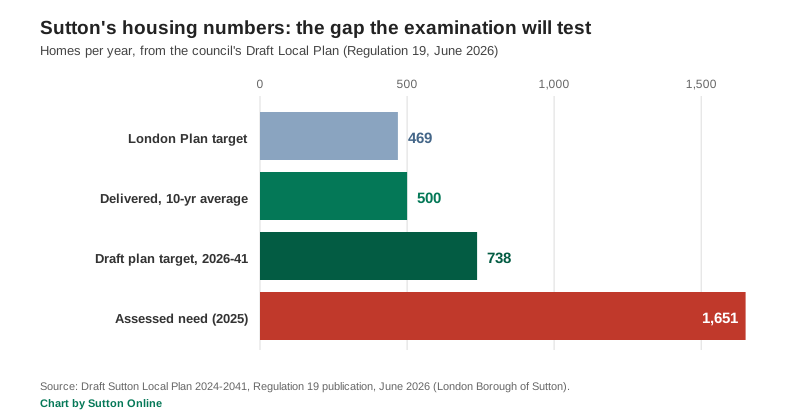
What it means for you: a plan target of 738 against an assessed need of 1,651 is the kind of gap inspectors probe hard. If the examination forces the number up, the pressure lands on taller town-centre schemes and the borough’s larger sites; if the council’s figure holds, Sutton’s suburban character changes more slowly. Either way, that single argument will shape most of the contentious applications this page covers in the years ahead.
The London Cancer Hub: £1 billion consent at Belmont
On 4 February 2026, World Cancer Day, the council granted planning consent for a £1 billion expansion of the London Cancer Hub, the life-sciences campus growing up around the Royal Marsden and the Institute of Cancer Research at Belmont. The approved scheme, led by Aviva Capital Partners with development manager Socius and designed by Gensler, covers around one million square feet of laboratory and research space across 12 acres, targets net-zero carbon in operation, and includes affordable homes for approximately 220 key workers. The council expects it to create 3,000 new jobs, most of them in high-skilled research and life-sciences manufacturing, and puts the fully built-out district at around 13,000 jobs and an estimated £1.2 billion a year of economic output (Sutton Council, 4 February 2026; Inside Croydon).
The transport plumbing is moving with it: Belmont station, the campus’s nearest, has £14.1 million of Levelling Up funding to double its service to four trains an hour by December 2027 (Sutton Council). Our trains guide covers the current Belmont service.
The town centre: St Nicholas Centre demolition and 740 homes
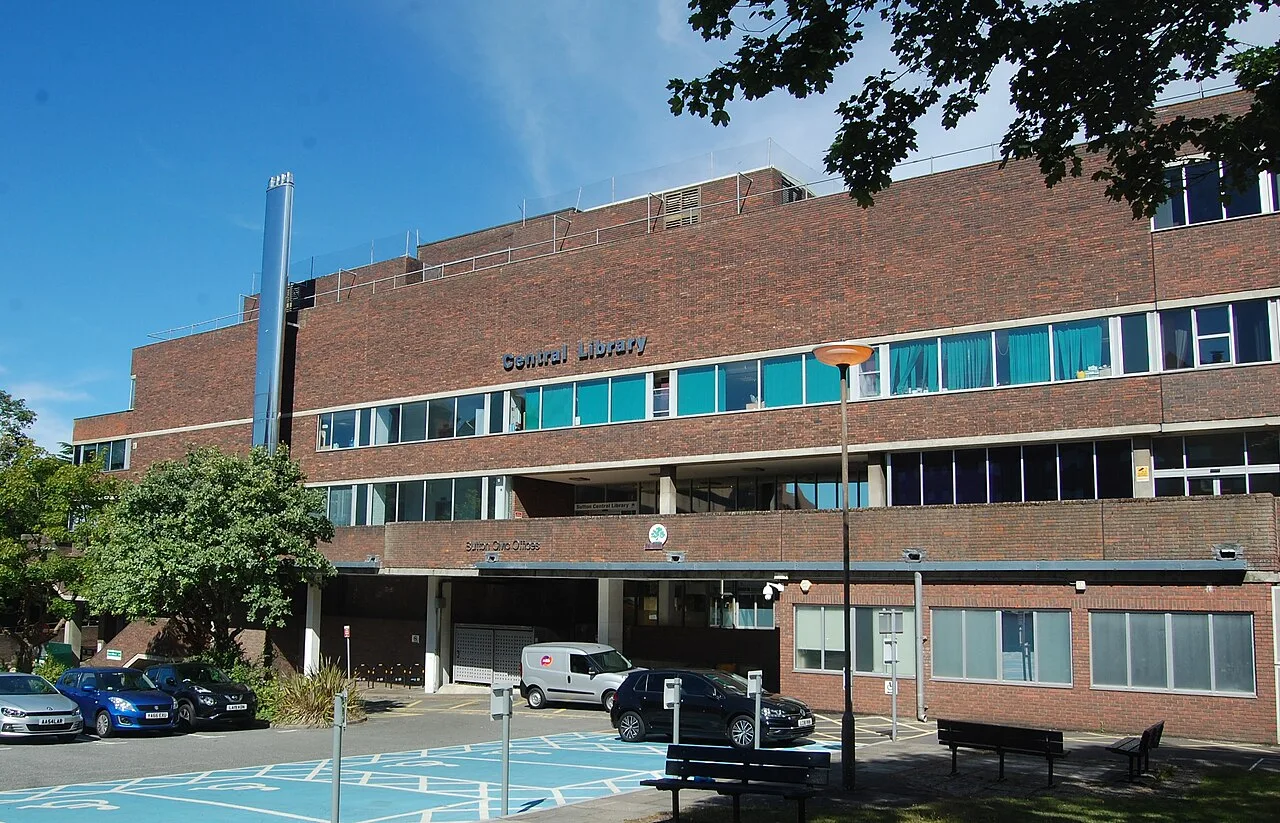
The other transformation is at the heart of Sutton itself. In October 2024 the council named Genr8 Kajima Regeneration Ltd as its development partner for a scheme spanning the St Nicholas Shopping Centre, the Civic Offices, the Gibson Road car park and the former Secombe Theatre (Genr8). The plan: demolish the 1992 shopping centre, which the council bought for £26 million in 2021, and replace it with a new Civic Hub housing council services, the library and community spaces, targeted for completion in mid-2029, alongside around 740 new homes at 50% affordable, including nearly 300 for social rent, across the three surrounding sites. The Omniplex cinema and the St Nicholas car park stay (ianVisits).
Nearby, the former B&Q site already has committee approval for one of the borough’s biggest housing schemes: up to 970 homes and commercial space across eight buildings of 6 to 21 storeys, considered at Planning Committee on 30 November 2023 (Sutton Council).
Recently completed: 92 council homes at Beech Tree Place
Planning news is not all pipelines. On 16 July 2026 the council opened Beech Tree Place, 92 new homes in the town centre, all let at council rent, built with Sutton Housing Partnership and Bugler Developments on the site of 25 end-of-life properties. The four blocks come with heat pumps, underfloor heating and solar panels, and the restored stone eagles from the original estate stand at the entrance. The council says it is on track for nearly 600 council homes completed or under construction by 2028, working towards a target of more than 1,500 (Sutton Council).
How to follow it, and have your say
Day-to-day applications carry on underneath the big schemes. The borough’s register runs on Idox Public Access at planningregister.sutton.gov.uk, and our guide to Sutton planning applications covers how to search it, set up alerts for your street, and comment before the deadline. Most applications are decided by officers under delegated powers; the Planning Committee, which meets monthly at 7pm at the Civic Offices, takes the ones that depart from the development plan, attract ten or more objections against the officer recommendation, or involve council land (committee papers). For the Local Plan itself, the page to watch is the council’s Local Plan review hub, where the submission and examination dates will appear.
Sources
- Sutton Council: Local Plan review (Regulation 18 and 19 dates, autumn submission report) and the Local Plan (2018 adoption, late-2026 adoption assumption)
- Draft Sutton Local Plan 2024-2041, Regulation 19 publication, June 2026 (PDF) (housing need of 1,651 a year, the 738-a-year target, 12,009 total, delivery record)
- Sutton Council: planning approval secured for London Cancer Hub (4 February 2026 consent, scheme contents, jobs figures) and London Cancer Hub site clearance (13,000 jobs context, Belmont rail funding)
- Inside Croydon: planning consent granted for £1bn cancer hub in Belmont
- Genr8: green light for Sutton town centre regeneration and ianVisits: St Nicholas Centre set for demolition (Civic Hub, 740 homes, timeline)
- Sutton Council: plans for new homes at key town centre site approved (former B&Q site, up to 970 homes)
- Sutton Council: tenants move in to new council homes (Beech Tree Place)
Checked against the council’s planning pages and announcements on 7 August 2026. Timetables slip, so confirm dates on the linked pages before relying on them. Our other guides cover Sutton planning applications, Sutton house prices and Sutton council tax bands.
Have your say