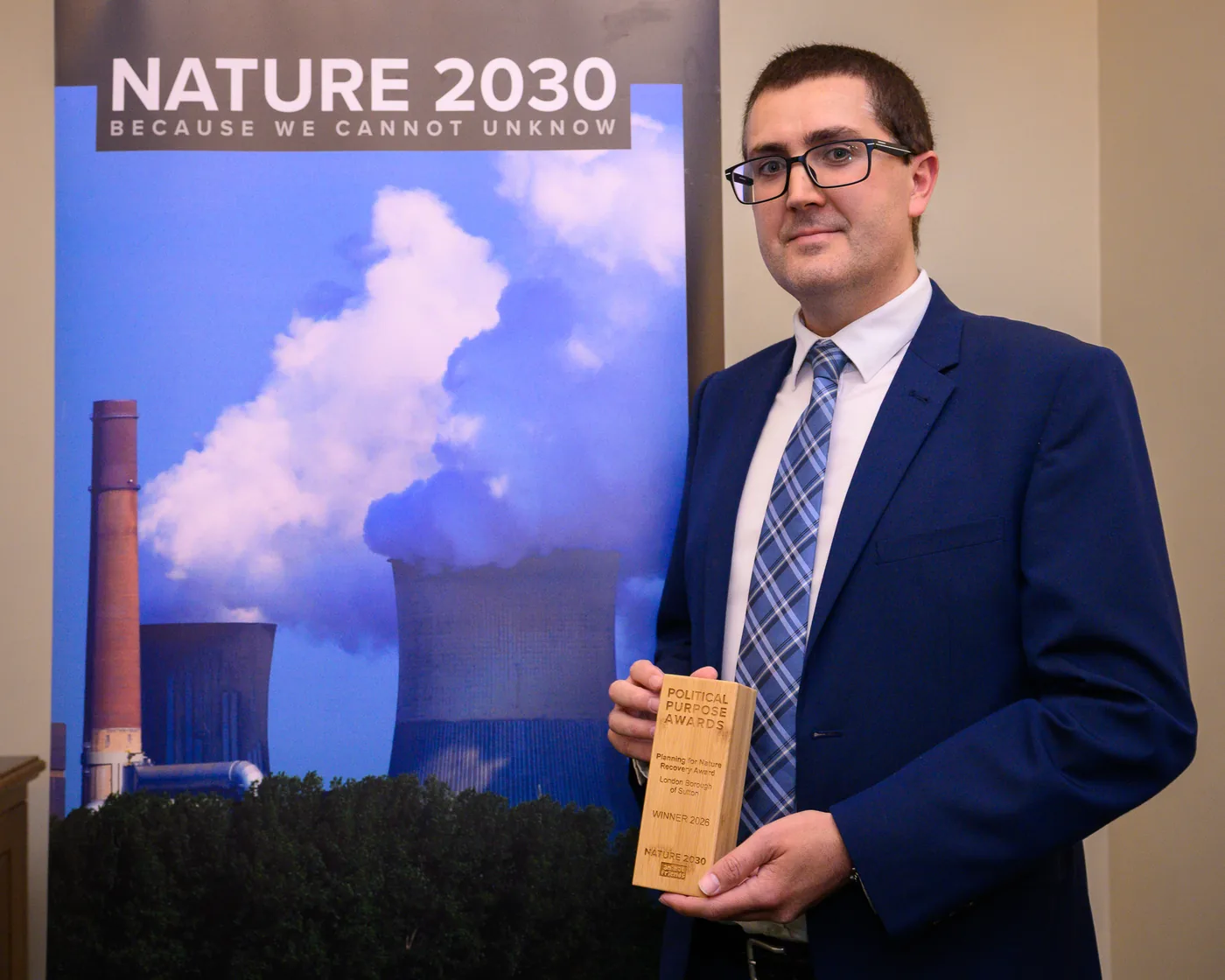

Sutton beat four councils to the Planning for Nature Recovery Award on 8 September. Its own report shows what Policy 26 asks of developers, and what is missing.
The London Borough of Sutton has won a national award for the way it handles nature in planning decisions, beating four other councils to it.
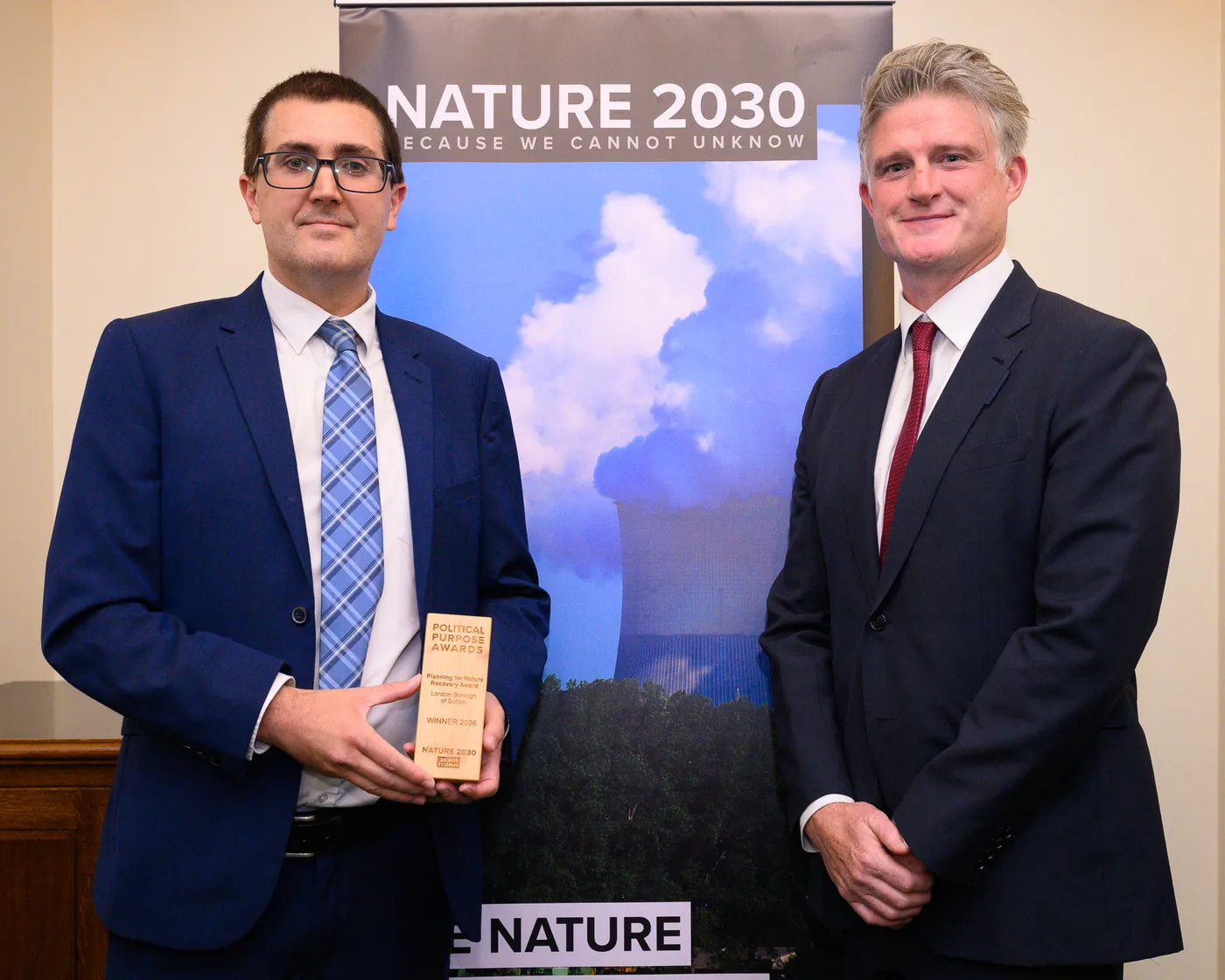
The council took the Planning for Nature Recovery Award at the 2026 Political Purpose Awards in the House of Commons on Tuesday 8 September. The other councils on the shortlist were Dorset Council, Mid Suffolk District Council, East Suffolk Council and Forest of Dean District Council.
The awards are run by the campaign Nature 2030 and the agency Higginson Strategy, and have been going since 2023. Tuesday’s ceremony was hosted by Ruth Jones MP. The nature recovery category is sponsored by London Wildlife Trust, whose chief executive David Mooney presented the award.
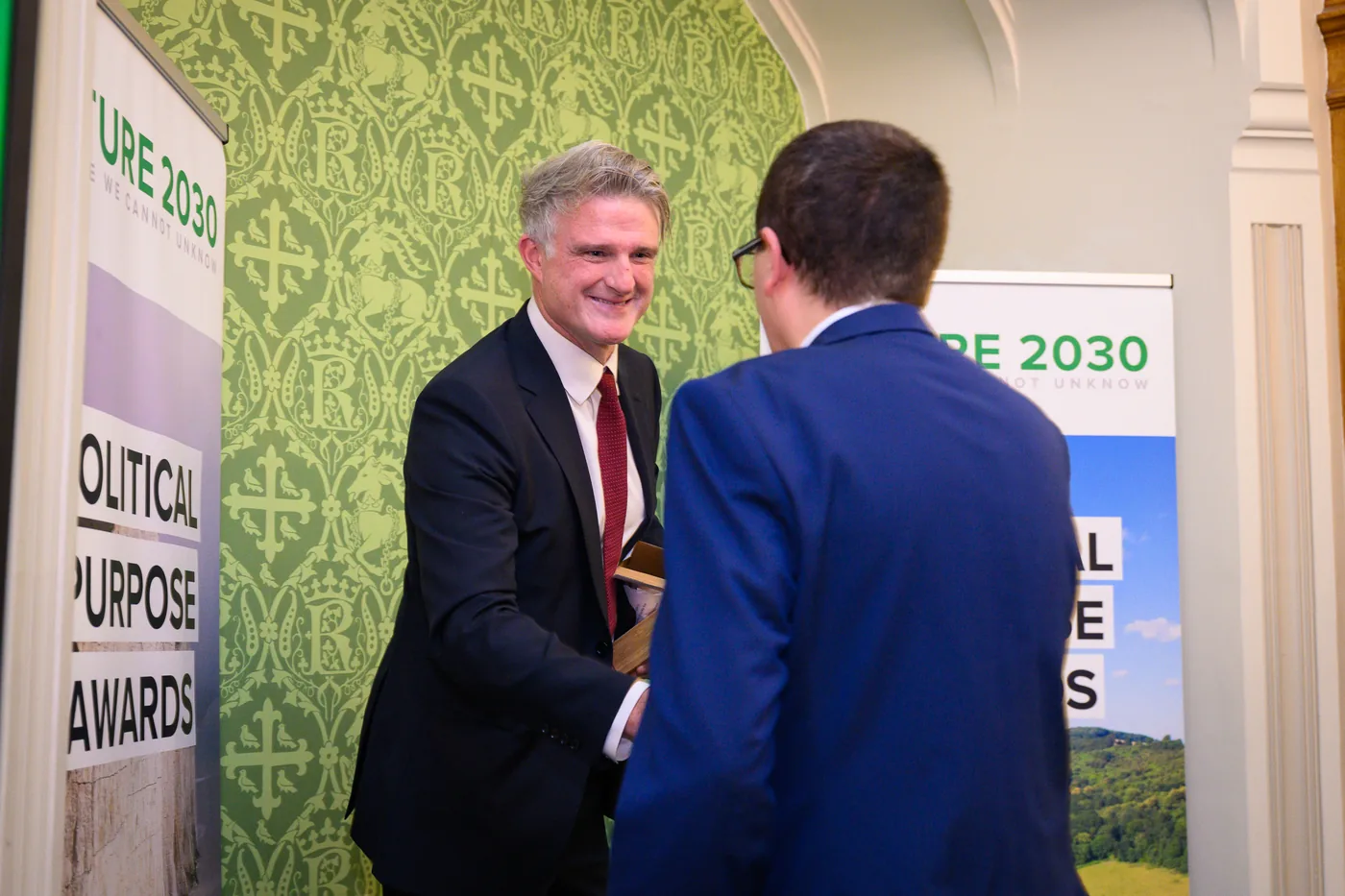
“Nature recovery depends on Councils preparing ambitious forward plans and making evidence-based decisions in their planning committees,” Mooney said. “I am delighted to recognise Sutton for the expertise it has built and the difference that is making for wildlife across the borough.”
John Higginson, founder and chief executive of Higginson Strategy, said: “Nature recovery depends on the decisions councils take every week in their planning committees. It is an honour to recognise Sutton for the expertise it has built and the difference that is making for wildlife across the borough.”
The London Borough of Richmond upon Thames was named Green Council of the Year on the same night, and Lord Whitehead, the former energy minister, took the lifetime achievement award.
What Sutton actually does
The award citation points at capacity rather than any single scheme, and the detail behind it is in a document the council published this year: its first Biodiversity Duty Report, dated February 2026 and approved by the Environment and Sustainable Transport Committee on 5 March. It covers 1 January 2024 to 31 December 2025 and was a statutory requirement under section 102 of the Environment Act 2021.
The core planning rule is Policy 26 of the Sutton Local Plan 2016 to 2031, adopted in 2018. It requires major developments to show no net loss in biodiversity value, measured with a metric, asks all developments to provide enhancements where possible, and sets creation targets: the council “will support developments that create 1 hectare of new woodland and 2 hectares of new chalk grassland”.
That was three years before the Environment Act made biodiversity net gain a national requirement, and six years before the mandate actually started in February 2024. The council’s own report claims the resulting position bluntly: it is “one of the most experienced and knowledgeable Local Planning Authorities in England” on quantifying biodiversity in developments and enforcing the conditions that follow.
Two other pieces sit behind the award. The council employs a Senior Biodiversity Officer, who presented the duty report to councillors in March alongside the Head of Parks and Open Spaces. And it was the first London borough to work with Greenspace Information for Greater London to map every habitat in the borough and give each one a biodiversity value, which gives planning officers a baseline to judge applications against.
Sutton also produced an interim guidance note on biodiversity net gain in April 2025, which sets a monitoring fee for significant onsite habitat gains and provides model planning conditions.
The numbers behind it
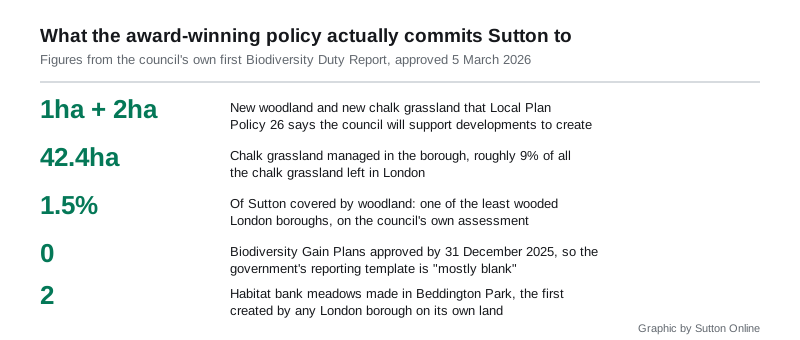
The chalk matters more here than in most of London. The southern half of the borough sits on the northern edge of the North Downs ridge, and the report says Sutton holds around 9% of London’s total chalk grassland, about 42.4 hectares of it under management, at sites including Roundshaw Downs and Cuddington Meadows. Cattle and sheep graze it to stop it turning to scrub.
Woodland is the opposite story. Sutton is “one of the least wooded London boroughs, with woodland covering 1.5% of the land”, and the existing woods such as Ruffett and Bigwood are small and fragmented. The report says the ambition to plant more is limited by what land could realistically be converted.
The borough-wide picture is honest about how little high-value habitat there is. A trial mapping exercise scored about 85% of the borough at either zero or low habitat distinctiveness, and found that the high and very high categories together cover only around 1.3% of the land surface.
What the award does not say
An award for process is not the same as delivery on the ground, and the council’s own report is clear about the gap.
By the end of the reporting period on 31 December 2025, Sutton had not approved a single Biodiversity Gain Plan. That is the document a developer has to get signed off before starting work under mandatory net gain. Because there were none, the government’s own reporting template for the borough is, in the report’s words, “mostly blank”.
The report also records where things went wrong. The council has taken enforcement action over breaches of soft landscaping and green infrastructure at the Wandle Trading Estate and at the Beddington Farmlands landfill restoration, and it lists condition compliance checks on major schemes including the Institute of Cancer Research’s living roofs, Hackbridge Primary School, the Harris Academy at Sutton Hospital, and Subsea7 and Sutton Point in the town centre.
Then there is the habitat banking problem. Sutton was the first London borough to create habitat banks on its own land, converting two areas of amenity grassland in Beddington Park into lowland meadows and selling the biodiversity units to developers who could not deliver on their own sites. The revenue paid for the upkeep of the meadows. Mandatory net gain has closed that route: offset sites must now be on the national gain site register, which needs a legal agreement with another party, and a council cannot sign a section 106 agreement with itself. Until Sutton finds a partner body, any offsetting from a Sutton development can be delivered anywhere in England.
The report warns of one more change. The government has proposed exempting minor developments on less than 0.2 hectares from net gain altogether, and it notes that even some major schemes in Sutton occupy less than 0.2 hectares.
What it means for you
If you are commenting on a planning application in the borough, Policy 26 and the April 2025 interim guidance are the documents to cite on trees, gardens and habitat. Both are on the council’s biodiversity strategy page, and applications themselves are on the planning register.
The council’s mapping found that suburban schemes, where the loss is usually back garden land, are the ones that struggle to reach even no net loss, while town centre sites clear the 10% bar easily because they start from almost nothing. That is worth knowing before you write about a garden plot behind your house.
The rule may get stricter. The report says the new Local Plan, now being prepared ahead of its Regulation 19 consultation, sets out an aim of adopting a net gain target above the national 10% mandate, though it adds that this may need review in light of proposed changes to national planning policy. That consultation is the point at which residents can argue for or against a higher figure.
For anything hands on, the council’s biodiversity team runs volunteer task days with Sutton Nature Conservation Volunteers three days a week for 50 weeks a year. In 2025 those volunteers gave 745 days, which the council values at £66,100 as an in-kind contribution and counts as match funding for grant bids.
Have your say