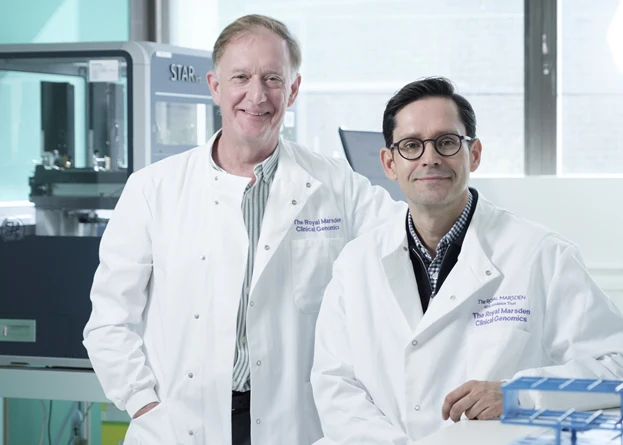

The Royal Marsden has opened the first NHS lab designed for nationwide composite biomarker testing, in Sutton. What the centre does and who it could help.
The Royal Marsden has opened a new cancer genomics centre in Sutton. The trust says it is the first NHS facility designed to develop and deliver composite biomarker testing for patients across the country.
The trust announced the opening of The Royal Marsden Centre for Cancer Genomics on 15 October (The Royal Marsden). Sutton Council republished the announcement the next day (London Borough of Sutton).
It sits on the campus the hospital shares with The Institute of Cancer Research, part of what the trust calls the growing London Cancer District in Sutton.
What the centre will do
Most cancer testing today looks for one marker, such as a single genetic mutation, and matches a drug to it. The trust says that approach has limits, because scientists cannot always predict why some patients respond and others do not.
Composite biomarker testing combines several kinds of data instead. According to the trust, the new centre will:
- combine genetic mutations, immune signatures and features taken from scans, using machine learning to find patterns
- act as a national biomarker facility for clinical trials, testing samples sent from anywhere in the country
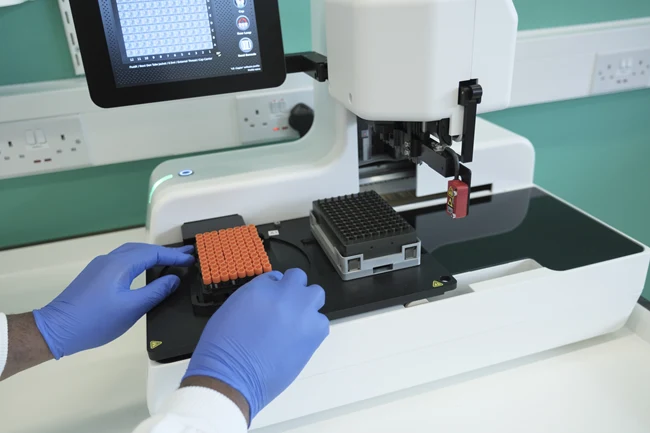
- expand circulating tumour DNA (ctDNA) testing, a blood test that picks up fragments of tumour DNA
- develop personalised diagnostic pathways such as MyTrack Myeloma
- take on translational research, moving lab findings into routine care faster
The centre is the cancer testing laboratory for the North Thames Genomics Laboratory Hub, one of seven such hubs in England. The move lets the trust relocate and expand its ctDNA programme. In 2023 the Royal Marsden was the first NHS trust to deliver ctDNA testing at large scale, the announcement says.
Who paid for it
The Royal Marsden Cancer Charity funded the facility, including the expansion of ctDNA testing. The National Institute for Health and Care Research (NIHR) added an infrastructure grant. The trust has not published the cost.
Dame Cally Palmer, the trust’s chief executive, said bringing “world-leading cancer research, clinical expertise and patient care on a single campus” would help get new diagnostics “into clinical practice faster”.
Professor Michael Hubank, Scientific Director of Clinical Genomics, said the centre would extend the trust’s genomic expertise “far beyond the bounds of our own hospitals”.
What it means for you
- This is a laboratory, not a new clinic. Patients do not book in. Samples reach it through their hospital team, including on clinical trials.
- Trials could reach more people. The trust says samples can be tested from anywhere in the UK, so patients may be able to join tailored drug trials without travelling to a major cancer centre.
- Blood tests are part of it. One patient on the trust’s TRAK-ER breast cancer trial has a personalised ctDNA test every three months to check for signs of the cancer returning.
- The campus is growing. The centre adds to the London Cancer Hub at Belmont, which won planning consent in February for a £1 billion expansion. Our planning news page has the detail, and our trains and travel guide covers Belmont station.
Have your say